Thank you! Your submission has been received!
Oops! Something went wrong while submitting the form. Please try again.

The activity of mining is bound to the environment in a myriad of ways. A location’s geology determines whether or not extraction will take place. Extraction in turn shapes the geography of the environment as rocky outcrops are transformed into pits and land is stripped bare of trees and grasses. The landscape becomes marked by the artefacts of industrialisation: headgears, smoke stacks, warehouses, office buildings, compounds, electric wires and railway lines. Mining does not simply transform a locale’s environment but is reliant on its features. Mining relies on the muscle power of human and non-human alike to dig shafts and haul ore. Animals are brought to mining centres to be slaughtered for meat or to be coerced into providing labour. Rivers are diverted to provide drinking water for the mining centre’s inhabitants and for the operations of the mine itself whilst new forests and biotopes emerge as urban environments see people from across the globe come and plant new trees and plants. Crops are grown in the locale or imported from afar to provide food for workers and fodder for animals. Furthermore, mining is responsible for the pollution of water supplies, the scarring of the landscape and the emission of toxic fumes into the atmosphere. In these ways industrial mining was dependent on features of the environment and in turn came to shape the environment.
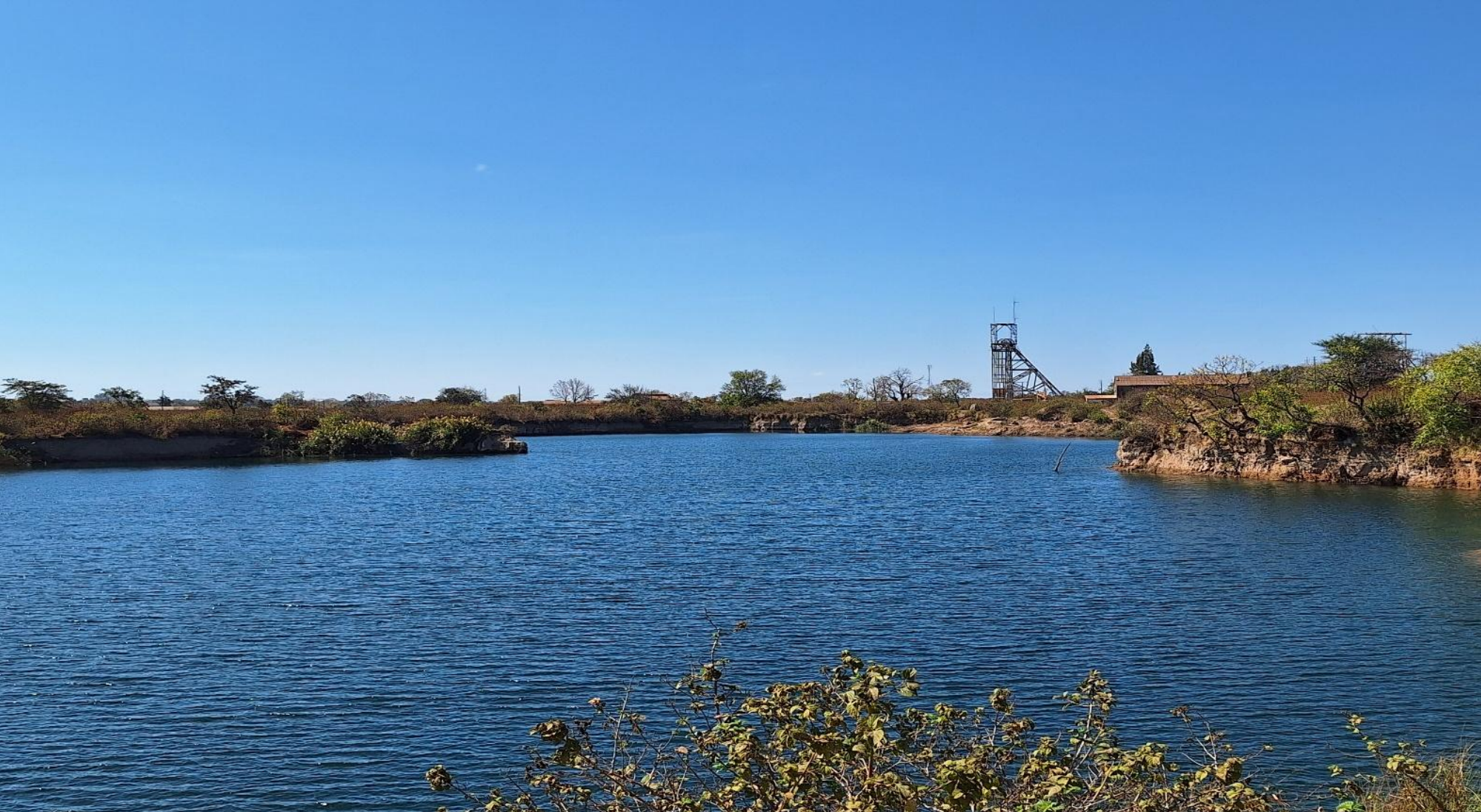
These changes and dependencies are illustrated when we look at the role of mining in shaping the economies and environments of southern Africa as cities such as Kimberley in South Africa and Tsumeb in Namibia developed across the region as a direct consequence of mineral resource extraction. A example of this process is the city of Kabwe in Zambia where the next Boom to Dust workshop is to be held. For more than 90 years industrial mining transformed the environment of Kabwe from an expanse of savannah grassland, miombo woodland (Brachystegia and Julbernardia) and isolated hills into a bustling urban centre. Kabwe is one of the research sites of the Boom to Dust project which explores the multi-species, environmental histories of mining centres across the southern African region.
Between the 25 and 27 August the Boom to Dust project will be hosting a workshop at Mulungushi University near Kabwe, Zambia. For this workshop we invite scholars to present papers on themes relating to the environmental histories of mining and mineral resource extraction. In particular we encourage historically grounded explorations of the relationship between mining and vegetation, mining and animals and mining and water landscapes.
It is the intention of the organisers to publish an edited volume in the African Dynamics Series with Brill Publishers. The edited volume will consist of select papers presented at the Boom to Dust workshops.
Day 1 - 25 August2026
8:30–9:00 - Openingand Registration
9:00–9:45 - Professor Royson Mukwena,Vice - Chancellor, Mulungushi University - Opening Address
9:45–10:00 - Walker Swindell - Procedural
10:00–10:30 - Coffee break
Chair: Mary Mbewe
10:30–11:00 - Walker Swindell - Mining, Meat and Muscle Power: Animals andIndustrial Mining in Kabwe, Zambia, 1902–1940
11:00–11:30 - Teckson Njovu - A History of Kabwe Lead Mine and its Impacton the Economic and Social Development of Kabwe Town, 1900–1994
11:30–12:00 - Discussion (EleneVernaeve, Discussant)
12:00–13:00 - Lunch
Chair: Walker Swindell
13:00–13:30 - Maaike Rozema - Friction and Surveillance: The SpatialContest Over Labor at the OMEG Mines in Northern Namibia, 1930–1940
13:30–14:00 - Janie Swanepoel - Precarious Ecologies of Commodity Booms inArid Rural Southern Africa
14:00–14:30 - Discussion (CraigPaterson, Discussant)
14:30–15:00 - Coffee Break
Chair: Maaike Rozema
15:00–15:30 - Audrey Muyuni and AustinM. Cheyeka - Beyond Steel and Sleepers:The Line of Rail as a Moral Laboratory on the Tonga Plateau, Northern Rhodesia(1904–1964)
15:30–16:00 - Givers Chilinga and DanielChola - Artisanal Stone Quarrying,Environmental Hazards, and Urban Poverty at Ngwenya, Livingstone, Zambia: AnEnvironmental History Perspective
16:00–16:30 - Discussion (Robby Kapesa,Discussant)
16:30–16:45 - Coffee break
Chair: Teckson Njovu
16:45–17:15 - Japhet Khendlo - Rivers of Extraction: Mining, WaterLandscapes, and Environmental Change in Northern Malawi – The Case of theKayelekera Uranium Mine
17:15–17:45 - Mauricio Jesus SérgioChipatime - Guedjas: Artisanal GoldMining and Pollution of the Révuè River, Manica (2000–2015)
17:35–18:15 - Discussion (RitaKesselring, Discussant)
18:30–20:30 - Dinner
Day 2 - 26 August2026 (Field Trip)
09:00–12:00 - Visitto Kabwe town centre, including the statue of Kabwe Man, the Fig Tree, RailwayStation, and Anglican Church
12:30–14:30 - Lunch at Diggers Inn
15:00 - Return to Mulungushi Universityand visit to Mulungushi Rock of Authority
Day 3 - 27 August2026
8:30–9:00 - Coffee
Chair: Janie Swanepoel
9:00–9:30 - Craig Paterson - The Strip: Violent Simplifications,Multispecies Mobilities and the Myth of Imperial Origins
9:30–10:00 - Panashe Madamombe - The Enduring Kicks of a Dying Antelope:Investigating the Impacts of Zambia's Copper Mines on the Roan Antelope
10:00–10:30 - Discussion (Maaike Rozema,Discussant)
10:30–11:00 - Coffee break
Chair: Craig Paterson
11:00–11:30 - Femke De Nil - Supplying the Shaft: The Commodity Chain ofMaize for the Union Minière du Haut - Katanga (1915–1955)
11:30–12:00 - Elene Vernaeve - Cattle, Copper and Land Politics: CompetingCommodity Frontiers in Twentieth Century Katanga, Democratic Republic of theCongo
12:00–12:30 - Discussion (Audrey Muyuni,Discussant)
12:30–13:30 - Lunch
Chair: Panashe Madamombe
13:30–14:00 - Rita Kesselring - Eyes Wide Open: Seeing Like a Mining Companyin Times of ESG
14:00–14:30 - Robby Kapesa - New Extractivism and Local Livelihoods inSub - Saharan Africa: Experiences from Zambia
14:30–15:00 - Discussion (Femke De Nil,Discussant)
15:00–15:30 - Coffee break
Chair: Walker Swindell
15:30–16:00 - Mary Mbewe - Life and Work in Broken Hill, NorthernRhodesia: Godfrey Wilson and Xavier Kofie, 1938–1941
16:00–16:30 - Discussion (GiversChilinga, Discussant)
Givers Chilinga and Daniel Chola - Mulungushi University, Zambia
This study traces the environmental and socio-economic history of artisanal stone quarrying at Ngwenya, Livingstone District, Zambia, showing how quarrying reshapes both landscapes and livelihoods. Quarrying has long sustained peri-urban communities, yet it transforms the environment through dust, noise, land degradation, shifting land use, and mosquito proliferation, illustrating the intertwined dependencies between human labour and ecological features.
Using a mixed-methods approach, 130 cooperative members were surveyed (122 completed responses), complemented by 14 semi-structured interviews with quarry workers, cooperative leaders, and a Ward Councillor, alongside field observations. Findings reveal persistent multidimensional poverty, with women disproportionately affected, and barriers to livelihood improvement, including income instability, limited skills, precarious employment, and weak social networks.
The study develops an Integrated Livelihood–Environmental Poverty Trap Model, demonstrating how environmental hazards, structural exclusion, and low income interact to reinforce vulnerability. By situating Ngwenya’s quarrying in historical and environmental context, the research illuminates how artisanal mining shapes landscapes, urban environments, and human livelihoods across southern Africa.
Maurício Jesus Sérgio Chipatime- Eduardo Mondlane University, Mozambique
Artisanal gold mining along the Révuè River in Manica, Mozambique, constitutes a historical phenomenon that highlights the profound interdependence between human communities and local ecosystems. Between 2000 and 2015, a period marked by post-war consolidation and economic liberalization, the guedjas—artisanal gold miners—intensified their activities, transforming both the physical landscape and the social practices associated with the river. This research adopts a multispecies environmental history perspective to understand how these processes shaped relationships among water, fauna, vegetation and human societies.
Based on oral testimonies, literature review, documentary analysis and newspapers, the study argues that artisanal mining caused significant alterations to the Révuè River ecosystem, particularly due to the systematic use of mercury by the guedjas. Mercury has contaminated the waters, accumulated in sediments, and bioaccumulated in aquatic fauna, causing fish population decline, soil contamination and health risks for local communities. Additionally, mining contributed to river siltation and riparian vegetation degradation, simultaneously affecting human consumption, fishing, and irrigated agriculture. These environmental effects extend beyond soil and water, influencing interactions between human communities and other species, revealing the multispecies character of the local environmental history.
Furthermore, the study integrates underexplored dimensions, such as community health, aquatic fauna dynamics, and riparian vegetation degradation, providing a rich narrative that connects history, ecology and society.
Japhet Khendlo - Mzuzu University, Malawi
Mining has long been embedded in, and dependent upon, water landscapes, reshaping river systems, human livelihoods, and ecological relations over time. This paper examines the environmental history of uranium mining at the Kayelekera Uranium Mine in Northern Malawi, highlighting the hydrological, ecological, and socio-economic transformations induced by extraction. Before industrial mining, rivers and streams in the region sustained agriculture, fisheries, livestock, and diverse riparian ecosystems. The development and operation of the mine reconfigured these water landscapes through abstraction, diversion, and the release of mining-related effluents, creating new environmental dependencies and risks for both human and non-human actors.
The study adopts an interdisciplinary methodology, integrating archival research with geospatial analysis, including multi-temporal remote sensing and GIS-based hydrological mapping. Structured household questionnaires and key informant interviews in surrounding communities documented local perceptions of water availability, quality, and environmental change. Results reveal reductions in riparian vegetation, altered drainage patterns, and increased pressure on surface water resources during the mining period, alongside persistent post-closure concerns regarding contamination and ecosystem degradation.
By foregrounding rivers as dynamic actors within extractive histories, the paper demonstrates how mining reshaped both physical water landscapes and human–river relationships. It contributes to the Boom to Dust workshop by providing a historically grounded, multi-scalar analysis of mining and water landscapes in Malawi, emphasizing long-term environmental legacies, socio-ecological impacts, and governance challenges, while situating Northern Malawi within broader regional and global extractive processes.
Robby Kapesa - University of St Gallen, Switzerland
Extractivism has been described in the literature as the production of value through extractive processes, such as mining, oil extraction, and certain forms of agriculture, that damage the environment and dispossess local communities of their resources and livelihoods. Yet very little attention has been directed to investigating and demonstrating these impacts in primary areas of value production – commodity frontiers. Thus, despite its increasing role in the global supply chain of most primary commodities and the many challenges burdening its economies, Africa has received relatively little attention in debates over extractivism (for example, compared to Latin America), with recent isolated efforts (Greco, 2020; Pereira & Tsikata, 2021; Kelly & Peluso, 2015; Dobler & Kesselring, 2019; Kesselring, 2025). More specifically, the sub-Saharan African region remains largely invisible in the core literature on extractivism, creating a gap that requires urgent attention to advance our knowledge, hence this article. The article employs a phenomenological research design to analyse specific socio-environmental effects that can explain extractivism and its consequences in sub-Saharan Africa, using the copper mining communities in Zambia.
Specifically, it draws on the daily experiences, deprivations, and struggles of the local communities (peasants) adjacent to large-scale export-oriented extractive (mining) operations. It aims to inform debates on extractivism and its effects on local livelihoods in sub-Saharan Africa. More broadly, it seeks to inform and enrich these debates with micro-level empirical evidence, something that has been pursued only marginally in the current literature on extractivism. Its findings reveal violent dispossession and marginalisation, severe environmental damage, forced displacement and destitution, and undermined workers’ power as inescapable effects of extractivism on peasant communities. The article argues that these effects are widespread across sub-Saharan Africa. Based on this, it concludes that private corporations collude with the state to extract and accumulate value in sub-Saharan Africa.
Rita Kesselring - University of St Gallen, Switzerland
To critics of the mining industry, the ESG (environmental, social, and governance) framework is meant to catch them where it hurts the most: profit and value for shareholders. These fragmented standards should be an incentive for the industry to alter its practices with regard to aspects that are beyond their «core business»: environmental footprint, relations to indirectly affected stakeholders, and transparency and accountability.
In recent years, companies have indeed engaged with the ESG guidelines and now disclose their social and environmental impacts, promoting them as part of their risk-controlling approach. The result is visible on the ground: to the managerial perspective, the environment and communities have become a risk to their reputation and profit and as such something to be managed.
In this paper, I will show how – paradoxically – relations to communities and authorities have become a means to suffocate this risk in the core. The paper draws on long-term field research with communities living next to mining projects in Zambia’s Northwestern Province, on countless ESG reports, on photographs of giraffes, chameleons, and snakes, and on an interview with the environmental manager of one of the largest copper mines in Zambia.
Panashe Madamombe - Leiden University, Netherlands
Whereas the kicks of a dying horse are synonymous with demise, the kicks of a dying antelope in 1902 in Northern Rhodesia marked the birth of a new industry – Copper. The shooting of a roan antelope by prospector William Collier near the banks of the Luanshya river led to the discovery of a vein of copper that had been unearthed by the frantic kicks of the dying antelope. At this site, the Roan Antelope Copper Mines was incorporated by the Rhodesian Selection Trust Group in 1927, to begin commercial extraction of the copper ore. In 1970, the mine was privatised by the government of Zambia, leading to the formation of Zambian Consolidated Copper Mines in 1982. In 1997, the copper industry was privatised and ownership of Roan Antelope went to the India-based Binani Group, which operated the mine until 2001, when heavy rains flooded the mine, leading to its permanent closure.
Despite the mine’s demise, Roan Antelope’s legacy persists in the form of the majestic roan antelope (Hippotragus equinus) that graces the corporate logo of Zambia’s state-owned miner – Zambia Consolidated Copper Mines – Investment Holdings (ZCCM-IH). This paper investigates how the copperbelt’s industrial expansion impacted the roan antelope’s habitation. Furthermore, the paper delves into how government officials balanced the demands of conservation versus the demands of the burgeoning towns on the copperbelt, whose labour force consumed copious amounts of protein. Additionally, the paper reviews how conservation efforts introduced by colonial administrators altered the relationship between the indigenous inhabitants and their wildlife.
Mary Mbewe- Mulungushi University, Zambia
This paper reconstructs the life and work of Xavier Kofie, an African research assistant and migrant labourer in colonial Northern Rhodesia (present-day Zambia), through the fieldnotes of social anthropologist Godfrey Wilson. Drawing primarily on Wilson’s unpublished notebooks from 1938 to 1940, the paper examines Kofie’s recollections of his childhood, education, and diverse employment experiences across Northern Rhodesia and Southern Rhodesia before he collaborated with Wilson in Livingstone and Broken Hill.
Rather than treating Kofie solely as an informant, the paper argues that he was an active intellectual collaborator whose linguistic expertise and sociological observations shaped Wilson’s understanding of African migrant labour and colonial society. Their daily work translating, discussing iciBemba, and reflecting on African social life reveals the collaborative nature of anthropological knowledge production in colonial Africa. By placing Kofie at the centre of the narrative, the paper contributes to emerging scholarship that seeks to recover the often-overlooked biographies of African intermediaries who made anthropological research possible. It also demonstrates how archival fieldnotes can be read against the grain to illuminate African agency, mobility, and intellectual labour within colonial research encounters.
Audrey Muyuni and Austin M. Cheyeka - Mulungushi University and University of Zambia, Zambia
This study examines how the inauguration of the Rhodesian Railways across the Tonga Plateau in the early 20th century served as the primary artery for Northern Rhodesia’s colonial economy. Between 1904 and 1964, this “Line of Rail” transitioned from a logistical necessity for the nascent copper mines into a transformative socio-cultural conduit. It facilitated a massive demographic shift, uprooting the youth from the traditional, communal moral frameworks of the Tonga Plateau and thrusting them into the hybridized, individualistic environments of burgeoning railway sidings and mining townships. While the railway is often celebrated for economic integration, it acted as a disruptor of indigenous social controls. The movement of youth toward the Copperbelt created a “moral vacuum” where traditional elders lost jurisdiction over the young.
This study addresses the tension between ancestral Tonga ethics and the “modern morals” of the rail line, characterized by increased commercialization, shifting gender roles, and the rise of urban delinquency. The objectives were: (1) to analyse the extent to which the railway facilitated a departure from traditional Tonga rites of passage toward urbanized social behaviours among the youth; and (2) to investigate the role of the Copperbelt’s labour demands in restructuring the moral economy of families living along the Tonga Plateau. This research employed a qualitative historical approach, utilizing archival records from the National Archives of Zambia and oral histories collected from elderly residents in towns such as Monze and Choma. A thematic analysis of colonial district reports and missionary correspondence provides a triangulation of the perceived “moral decay” versus social evolution.
The findings indicate that the “Line of Rail” did not merely transport goods; it expressed a new social identity that prioritized wage labour and individual autonomy over rural gerontocracy, fundamentally altering the Tonga social fabric before independence.
Femke De Nil - Ghent University, Belgium
Since Carl Eicher and Derek Byerlee in 1997 raised the possibility of an African Green Revolution based on maize, the crop has come to occupy a central position in economic and developmentalist debates on economic growth and food security in Sub-Saharan Africa. In contrast to its contemporary potential, however, the economic relevance of this starchy plant in the region’s history has so far been explored only to a limited extent (e.g. Miracle, 1966; McCann, 2007). One region that has been systematically overlooked in this respect is the Democratic Republic of Congo.
This paper aims to shed light on maize’s role in the formation of the colonial economy of the Belgian Congo. In order to do so, it turns to the history of the Union Minière: the Katangese mining company whose copper extraction alone accounted for 45% of the colony’s total export value by 1960. More specifically, the paper (1) traces the place of the crop in UMHK’s politique indigène between 1915 and 1955, and (2) subsequently examines the (changes in the) commodity chain that emerged from the company’s demand.
The first part of the paper demonstrates that maize formed the cornerstone of its rationing policy for four decades (1915–1955) and, from the 1920s onward, was additionally promoted as an instrument to secure the stabilization of its African labor force (main-d’œuvre indigène). The subsequent analysis of the commodity chain that developed from the company’s food demand shows how the mining giant relied on various rural regions for its maize supplies, ranging from Katanga and foreign colonies such as the Rhodesias and the Union of South Africa, to the Kasaï Province. The center of gravity of maize production repeatedly shifted, as the company was compelled to relocate its sourcing in response to the socio-ecological contradictions it had itself generated within these production zones (e.g. deforestation, soil degradation, and social tensions).
Teckson Njovu - Mulungushi University, Zambia
The study explores the historical development of the Kabwe lead mines and examines the impacts on the economic and social development from 1900 to 1994. Established during the colonial period in Northern Rhodesia, the Kabwe lead Mines was a key centre of mining activities and this contributed to the growth of the town. The study analyses significant contributions of the mine to economic development through employment creation, infrastructure expansion, and the provision of social amenities such as health services, education centres and housing. In addition, the study also highlights the negative consequences associated with the mine’s activities, such as lead pollution, health challenges, the closure of the mines which led to socio-economic decline, and environmental degradation. The study then concludes that while the Kabwe Lead Mine was central to the economic and social transformation of Kabwe town, it also left lasting challenges that continue to affect the area even after its closure.
The research topic strongly resonates with the theme “Mines, Meat and Maize” in that Kabwe Lead Mines represent components of the theme by illustrating how mineral extraction reshaped the physical and human environment. Mining activities altered land use, degraded soil and caused long-term contamination of water, air, and farmland in Kabwe. This shows how mining transformed landscapes and created environmental hazards that outlived the mines themselves. Lastly, the study highlights the relationship between the food system (meat and maize) and mining. The growth of the Kabwe Lead Mines led to rapid urbanization and increased food demand. This encouraged the surrounding rural areas to produce maize and livestock to supply the mine workers and urban residents. The mine indirectly shaped agricultural production, land use and food distribution networks.
Craig Paterson - Rhodes University, South Africa
Taking Trail of the Copper King (1959) as a point of departure – a novelised account of Orlando Baragwanath’s “discovery” of the Zambian Copperbelt – this paper identifies a convergence between epistemic and material aspects of violent simplifications at the heart of colonial modernity. ‘Violent simplification’ refers to the process of forcefully reducing complex social, ecological, or human realities to simple, rigid, and often absurd, categorical schemes. This is a conceptual extension of the “modular simplifications” which, along with “feral proliferations,” are two dominant landscape forms through which “more-than-human social structures reveal themselves” in the contemporary world. Within this conceptual framework, we can uncover “histories that are at once human and more-than-human.” I briefly examine how violent simplifications persist in the postcolony and continue to shape historical knowledge. My argument is methodological: such simplifications physically destroyed evidence on the landscape – it was stripped – often leaving only palimpsests. Our archives largely reflect what colonial states sought to see and record: knowledge to govern rather than to understand. Many human and non-human actors evaded incorporation into the colonial order, leaving faint or no traces, and were discursively erased through ideological separations of nature, technology, and society now dismissed as false.
The paper offers a theoretical and methodological exploration of violent simplifications and their implications for historical practice. I present more-than-human microhistories of landscapes generated through travel on foot. Case studies include hiking trail construction in the Southern Cape; forestry in Harding, KwaZulu-Natal; invasive cacti on farmland; interspecies efforts to restore sacred water bodies; and ore truck movements from Hotazel to the port of Ngqura near Gqeberha. These reconnaissance reports show how violent simplifications reorder landscapes and archives, and suggest ways of writing histories attentive to more-than-human agents. Attentive critical travel can orient research toward the more-than-human historical position and further destabilise anthropocentric histories.
Maaike Rozema - African Studies Centre Leiden, Netherlands
During the early-to-mid 20th century, contract workers at the Otavi Minen- und Eisenbahn-Gesellschaft (OMEG) in what was then South West Africa (now Namibia) frequently utilized desertion as a primary mechanism of labor resistance. Utilizing unexamined ‘desertion’ files from the OMEG archives from the 1930s and 1940s, this exploratory paper examines the spatial contest in northern Namibia between indigenous workers navigating the landscape to escape, and colonial authorities engineering it to capture them.
Building on concepts of political scientist James Scott, this paper applies the theory that authorities attempt to map and organize environments to make populations easier to track (‘legibility’), while laborers use difficult, harsh landscapes to slow down state power and hide (‘friction of terrain’). Using this framework, the paper explores how the physical environment simultaneously enabled workers to evade state control and provided harsh natural barriers that facilitated colonial containment. Moreover, the paper examines the ways in which mining capital constructed infrastructure to engineer the landscape, transforming the bushveld into a space of surveillance and spatial control.
Janie Swanepoel - University of Stellenbosch, South Africa
In southern Africa, rural and marginal environments have seen various boom-to-bust cycles driven by mining and agricultural commodity production. While mineral discoveries such as diamonds and copper are often foregrounded, agricultural booms – ranging from ostrich feathers and wool production to the Karakul (Persian pelt) trade and meat industries – have equally reshaped rural landscapes and livelihoods. These sectors are frequently interdependent, as mining industries required substantial food supplies, especially meat, linking extractive and agricultural economies across arid regions.
Scholars often emphasise the social harm and environmental degradation produced by these large-scale commercial enterprises, particularly in fragile semi-desert ecologies left depleted once markets collapsed. However, focusing only on impact risks obscuring the precarious and contingent conditions under which accumulation becomes possible. Commodity booms depend on volatile global supply chains, as well as unpredictable ecological relations emerging through complex interactions among humans, animals, plants, and other actors. At the same time, nonhuman agents – including pests, drought cycles, and adaptive species – often resist or reconfigure attempts at control or sometimes thrive within the infrastructures designed for capitalist production.
This paper examines these dynamics by drawing on boom-and-bust agricultural projects across southern Africa, with particular attention to the rise and decline of the Karakul pelt industry in southern Namibia. Through this case, the paper highlights how colonial modernity’s promise of transforming arid landscapes into stable sites of capitalist productivity repeatedly encountered ecological limits and unexpected forms of resistance. By highlighting entangled human and nonhuman histories, the paper challenges persistent binaries separating society from nature. Instead, it argues for understanding rural commodity booms as precarious assemblages shaped by ecological contingencies, global markets, and multispecies interactions, thereby offering a more embedded account of accumulation, environmental change, and rural transformation in southern Africa.
Walker Swindell - African Studies Centre Leiden, Netherlands
This paper examines how animals were affected by the growth and development of the mining town of Broken Hill (now Kabwe) in Northern Rhodesia (now Zambia) between 1902 and 1940. To date there have been relatively few works of history on the former lead and zinc mine, let alone those that have examined its multi-species past. This is because scholarship has largely focused on the Copperbelt region and the anthropocentric biases of most historians. This paper sheds new light on the history of a largely neglected mining centre whose development was crucial to the integration of modern Zambia into the global economy. Furthermore, in focusing on how non-human subjects were affected by the mine and town’s development, this paper illustrates that industrial change affects more-than-just-humans. An understanding of the environmental past of mining centres should take into account how other constituent elements of the biosphere were incorporated into these environments, with oftentimes contradictory consequences.
This paper analyses how four different groups of animals were integrated into and affected by the development of Broken Hill between the discovery of the lead-zinc ore deposit in 1902 and the outbreak of the Second World War. This was a period of significant urban growth as labour and capital turned this patch of savannah grassland and miombo woodland into a bustling town. The case studies are: tsetse fly, wildlife, cattle and fish. This paper analyses how each of these animal groups was integrated into the mining-centred economy of Broken Hill. In doing so, this paper adopts a multi-species approach which entails centring the historical experiences of animals through combining insights from animal sciences with a critical reading of archival sources.
This paper argues that animals were integrated into the mining-centred economy of Broken Hill primarily as sources of meat and muscle power. Animal flesh and muscles were exploited for the benefit of both the urban and rural populations of Broken Hill, whose growing demand for food and traction power brought in animals from far afield. This process was facilitated through a profound transformation of the local environment, namely the clearance of bush and trees. This facilitated the elimination of some local animals, which in turn enabled the introduction and even growth of others. The impact of mining on animals was just as contradictory as that on humans and agricultural practices.
Elene Vernaeve - Ghent University, Belgium
This paper examines how cattle companies navigated the competing territorial interests on the Congolese side of the Copperbelt during the colonial period. Katanga has mainly been conceptualised as an industrial region, where agricultural companies seem to have disappeared into the background of the ever-growing research on mineral extraction. Using the concept of commodity frontiers, this paper reveals overlapping claims of cattle and mining companies on the same plots of land, as well as the complex interactions on the ground between them.
As mining companies attracted large labour forces to the industrial centres, demand for reliable food supplies rose significantly. There were serious attempts to create a self-reliant meat supply system in Katanga. Tens of thousands of head of cattle were imported and, to support this initiative, cattle companies received vast land concessions, even though much of the land was considered initially unsuitable for cattle farming. Cattle companies were contractually obliged to develop their concessions and had to make the difficult financial decision of which plots of land to develop, facing the risk that mining companies could reclaim land for excavations or living spaces for their workers.
Depending on the possibility of mining excavations, companies started short- and long-term modifications of the land, such as deforestation, the removal of “unproductive” flora, and the introduction of high-yielding non-native fodder crops. Throughout their lives, cattle were moved to different locations in response to seasonal changes, reproduction cycles, and disease outbreaks, in an effort to maximize productivity. The end of their lives took place at the fringes of the industrial centres: slaughterhouses and grazing plots to fatten up the cattle were located near cities and mines to ensure fast allocation of fresh meat. As a result, cattle were often confined within heavily polluted landscapes. Monthly reports show how cattle died from drinking polluted water or grazing on polluted pastures.